

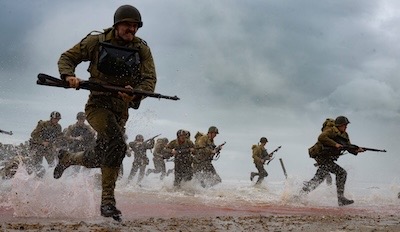
Weather affects us all, but this film shows the absolute pressure put on the decision that changed the fate of the world in 1944. Director Anthony Maras (Hotel Mumbai), co-wrote the film with David Haig who wrote and was the lead actor playing meteorologist James Stagg, in the 2014 stage play. The strength of the dialogue and arguments presented by this cast keep you totally engaged in their strategic quandary deciding when to storm the beaches of Normandy.
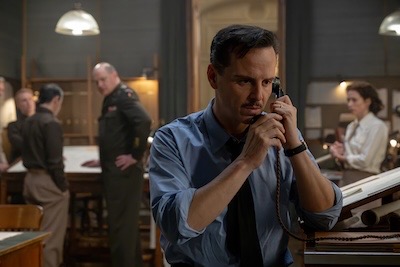
Andrew Scott’s stoic portrayal of Churchill’s top meteorologist Stagg, going to head-to-head with Eisenhower’s ego-centric weather specialist, Irving Krick (Chris Messina) creates a test of wills in very contentious scenes. Before there was any action on the battlefield, the war between these two men created a huge problem for General Dwight D. (Ike) Eisenhower (Brendan Fraser). They had only 72 hours to make a decision based on their forecasts which could put the fate of hundreds of thousands of lives on the line. Scott’s portrayal is multi-layered, having to leave his pregnant wife so he could use his forecast expertise. He needed to advise Eisenhower for the best day and time to mount the Allied invasion, with the least risk.
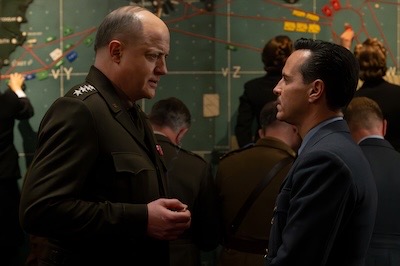
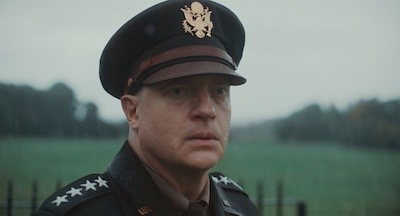
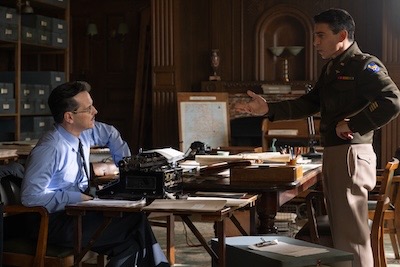
In the beginning scenes of the film, Maras shows a training exercise that went horribly wrong. that disaster plays over and over again in Eisenhower’s mind. Cinematographer Jamie Ramsay (See How They Run, Living) gets thought filled closeups of Fraser trying to decide what he should do. He only wants to make the right decision to keep as many of his troops alive when he will finally give the order to launch the massive seaborne invasion. The prickly British General Bernard “Monty” Montgomery (Damian Lewis), wanted to ignore the weather and just go for it.
This is another unique role for Fraser (Rental Family, Academy award winner for The Whale). It’s not an imitation of Eisenhower, but is effective playing a leader who knows how monumental and consequential his decisions will be. Composer Volker Bertelmann (Conclave, All Quiet on the Western Front) enhances the quiet contemplation of the General, the action earlier in the film of the training catastrophe and the strain throughout this film, contemplating the crucial timing of the upcoming mission.
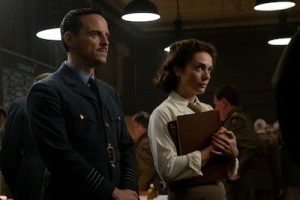
Also effective is Kerry Condon (F1:The Movie, The Banshees of Inisherin) as Kay Summersby, Eisenhower’s assistant, who knows who needs to know what, and how to keep the information flowing. She’s the indispensable aid-de-camp trying to help everyone stay on track.
What we found particularly interesting, was the difference between Stagg and Krick’s scientific weather methodology. Maras shows Krick using historical weather maps for the area. His predictions are based on what happened before, that he said would happen again. In contrast, Stagg insisted on having specific, current data such as the changing wind, cloud formations and possible storms that could affect the success or failure of the mission. At the same time, Stagg is notified of a vital personal emergency concerning his wife and unborn child while tension mounts, having to keep his emotions in check. He knows how crucial this mission is to winning the war. The scene with him waiting to see if his predictions are right is gut wrenching and tense. You will feel it.
Credit to Director Maras along with co-writer Haig taking what could have been a very dry subject. But with the capable and convincing performances from Scott, Fraser and Messina, this is a detailed history lesson that delivers a winning forecast.
Focus Features 1 Hour 40 Minutes PG-13
Related posts:
 Two Women
 Knives Out Writer/Director Rian Johnson talks about having the whole cast on the set
 THE CAMPERS AT THE SUNDANCE PREMIERE OF CRIP CAMP: A DISABILITY REVOLUTION TALK ABOUT THEIR EXPERIENCE AND THE FILM.
 Ford v Ferrari Stunt Coordinator, Robert Nagle
 Interview with Waves stars Kelvin Harrison, Jr., Taylor Russell and Writer/Director Trey Edward Shults talking teen angst, family and sound design.
 White With Fear